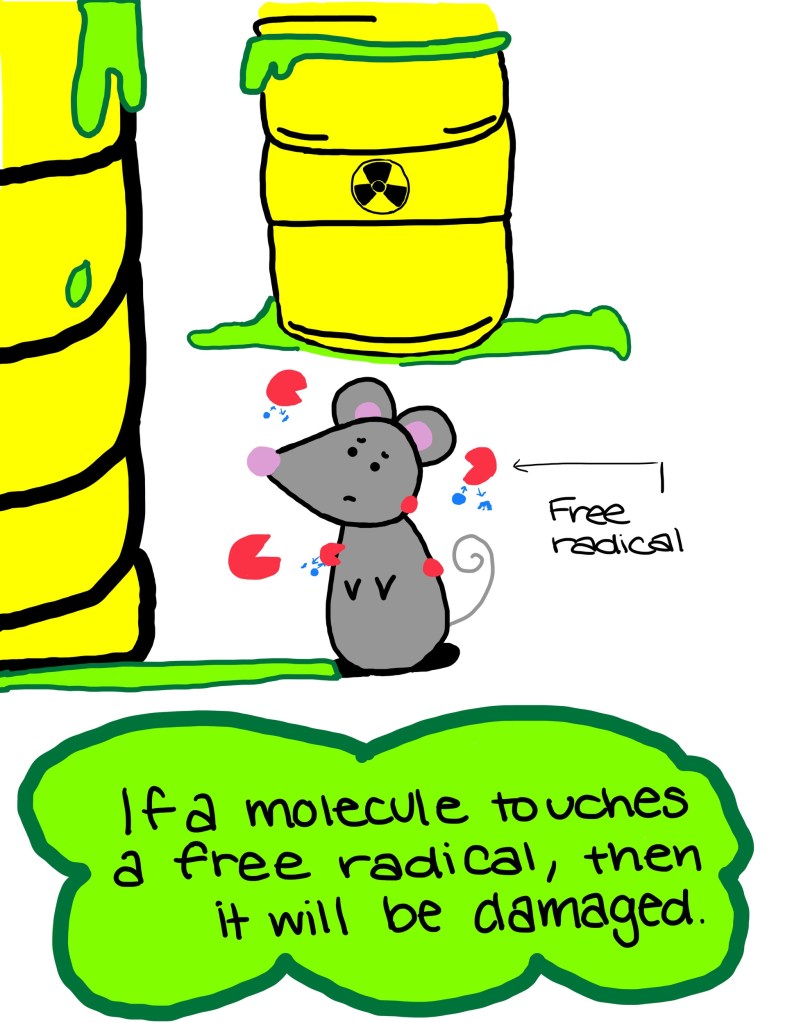
Figure 1 : The blue circles (molecules) hit the free radical (big red circles) and become damaged.
An unpaired electron needs to be paired with another electron to create a full valence shell. If an atom doesn’t have a full valence shell, then it will steal from other atoms. Free radicals are shown as the red circles above. Free radicals are highly reactive due to their unpaired electron! In contrast, blue circles represent molecules which contain a full valence shell. These molecules do not need to steal electrons from other atoms. An easy way to remember a free radical is to think of them as thieves always wanting to steal.
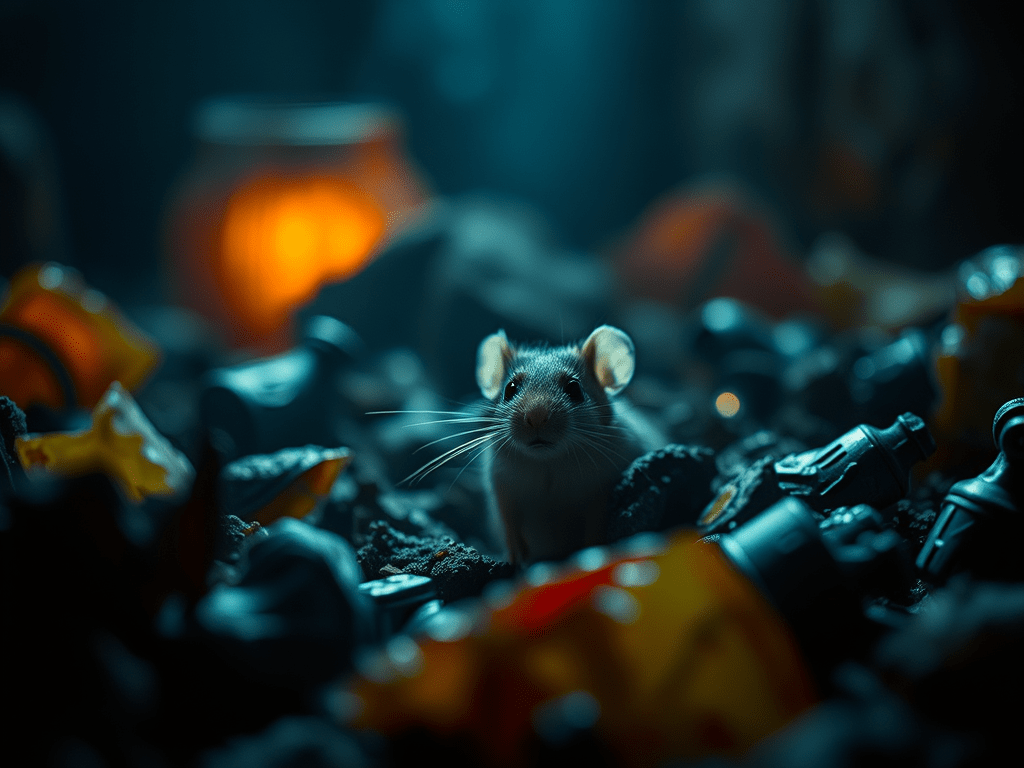
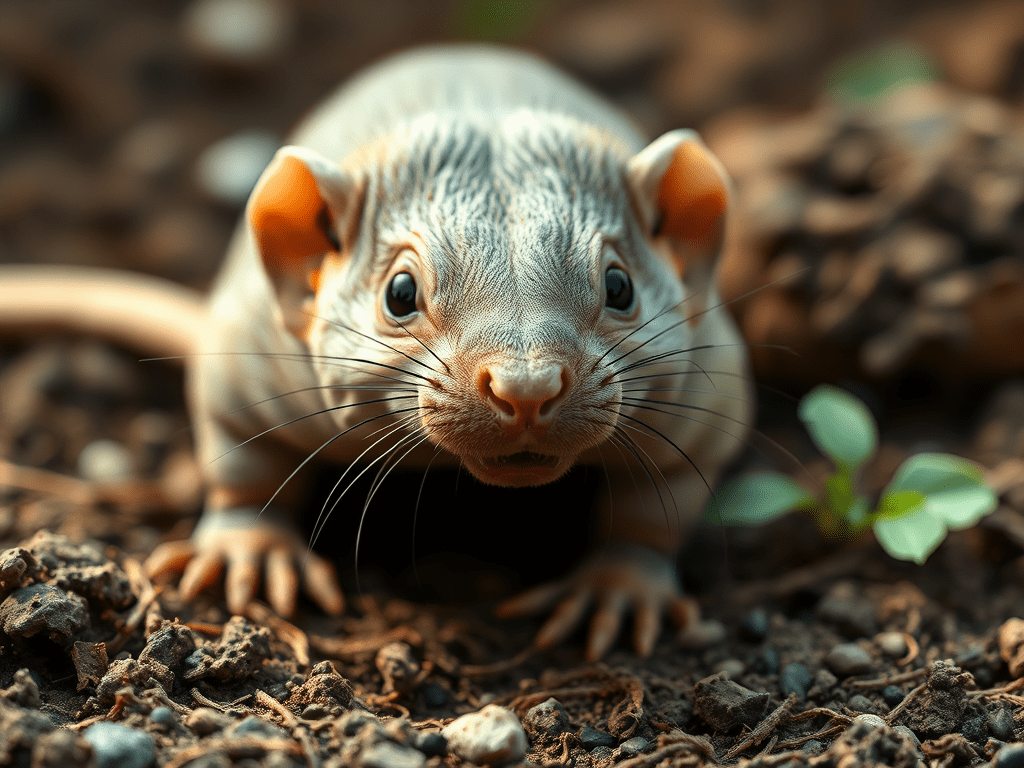
Free radicals are toxic compounds to many mammals. Due to free radicals damaging DNA (Deoxyribonucleic acid). The mouse is completely surrounded by toxic waste, it’ll likely experience some bad health effects later.
But what if a mammal was surrounded by a small amount of free radicals daily.. could it get used to this environment?
The answer is yes, this is a possibility! This concept is known as hormesis, which will be covered next article!
Inspired by : Jellyfish age Backwards: Nature’s Secret to Longevity by Nicklas Brendborg



 Science with Carly
Leave a comment